
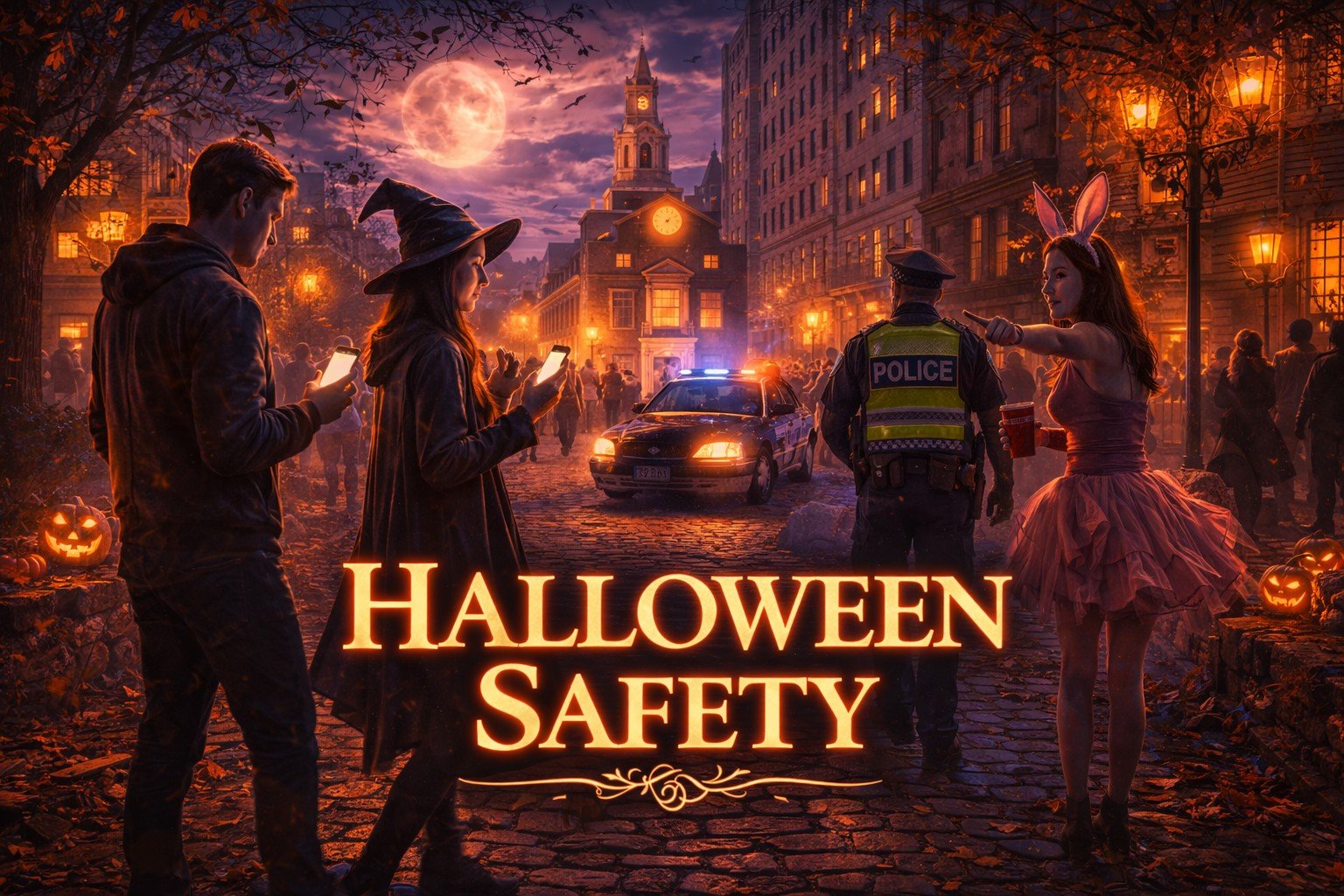
Halloween Safety in Boston
Halloween Boston sat down with Boston-based criminologist and security specialist, Gershon Ben Keren, to talk about staying safe during Halloween. We asked him a few questions concerning crime and how to stay safe during this holiday.
Does crime go up during Halloween?
The simple answer is yes, crime does tend to increase on Halloween, however this doesn’t occur uniformly across all types of offenses. The rise is typically concentrated in specific types of offenses, many of which are linked to routine activity changes, anonymity (costumes), alcohol consumption, and large gatherings. In many cases when there are a large number of people in public spaces, the potential number of offending opportunities increases.
From a criminological perspective, Halloween creates what Routine Activity Theory would describe as the ideal convergence between potential targets and motivated offenders. It is worth noting that a person with no history of offending can become “motivated” in a particular situation e.g., due to excessive alcohol consumption it seems a “good idea” in the moment to set a trash can on fire etc. The combination of Halloween parties, bar crawls, and large gatherings increases both victimization risk and offending behavior. Alcohol often acts as a disinhibitor, lowering thresholds for aggression and an increase in poor decision-making.
In terms of violence, Halloween usually sees a modest increase in assaults, which tend to be simple rather than aggravated (such as where a weapon is used and/or the intent is to inflict serious physical harm), and are usually the result of an ordinary social interaction taking a “wrong turn” as opposed to a premediated/planned attack e.g., something starts as an argument and escalates to physical violence.
Are there any simple ways to avoid such arguments from escalating?
Yes, most people don’t want to get involved in a physical altercation, however often they lack the social and communication skills to de-escalate and/or safely disengage from these types of confrontations. Many people think that de-escalation is simply about apologizing, being polite and talking softly etc., however although de-escalation techniques and methods can be simple to apply, they actually work in a fairly complex psychological and emotional way. Several years ago, I did a Google Author Talk on this subject, (video below).
As well as simple assaults and acts of violence, are there any other crimes people should be aware of, and try to prevent?
Yes, crimes involving theft, such as pick-pocketing tend to go up. This is simply because of the large number of people, often in crowded places, presenting opportunities for such offenders. We tend to fall foul of a “herd fallacy” believing that the more people there is, the less chance for offenders to commit a crime, because everybody else is acting as a visual deterrent, however everybody in the “herd”/crowd believes that the others are engaged in this activity, and so everybody’s general situation awareness drops. It’s always, from a safety perspective, recognizing this and that certain offenders such as pickpockets benefit from it.
In criminology we have an acronym – CRAVED - to explain what type of objects are susceptible to theft. Without going into all the components that the acronym spells out, there are certain attributes that are worth noting, e.g., goods that are attractive to offenders (thieves and robbers) are those that are Concealable, Removable, Available, Valuable, Enjoyable, and Disposable. Mobile phones meet all of these criteria, as they are small enough to be concealable, unlike a TV, they are valuable and easily removeable, whether by someone snatching a phone from your hand (and if the person is in costume they enjoy anonymity), or engaging in an act of pickpocketing, and they are somewhat easily disposed of i.e., there is a ready market of buyers who know how to unlock them etc. Also, perhaps what is more valuable than the phone itself is the data on it, which can be used for identity theft/fraud. Having an unlocked phone in your hand because you are texting in public creates a specific vulnerability in regard to this.
If your phone is snatched or stolen is there anything you can do?
Both Apple and Android phones have apps which you can use to remotely wipe the data if stolen. A quick search will reveal these and how they can be used and activated.
If somebody does snatch your phone, or you realize they have picked your pocket, should you chase after them?
As tempting as this is i.e., to directly address this injustice/crime committed against you, from a safety perspective, it is generally not a good idea. In my time working in security, I have always worked from three assumptions i.e., that an offender is armed (even if you can’t see a weapon), they are assisted (they have accomplices, even if you can’t see them), and they are able (they know how to use violence effectively). This means that when/if you catch up with an offender, you might be in an unfamiliar environment having to deal with multiple, motivated attackers who are armed. It is safer to accept the loss and wipe that data. I have attached a link to an article I wrote on the issues with trying to chase offender (article can be accessed by clicking here).
I have young/teenage kids who want to go out trick or treating without a parent supervising them, do you have any advice I can give them regarding their safety?
One of the most important pieces of safety advice that we often overlook or forget to give our kids, is not to engage in enjoyable risky behavior. We have a tendency to think that because our kids are “good”, well-behaved at home etc., that they will conduct themselves this way in public. The psychologist Judith Harris’s research has shown that kids and teenagers are not “consistent” in their behaviors and that they adapt them to the social groups they are with in ways which benefit them e.g., if a teenager has learnt that they are rewarded in some way at home by being polite and well-behaved etc., that is the way they will act, however if when they are away from home with friends who show them respect when they take risks and engage in criminal behavior, then this is how they will likely act etc.
Trying to guide Kids/Teenagers to go out in smaller groups of close friends is more likely to keep them out of trouble than if they are in a large group. In a large group there is a greater chance of having those who are a “bad-influence”/make wrong choices present and a greater amount of peer pressure for others in the group to follow suit. All individuals have two “identities”, there personal identity and their social identity, which means if a group decides to engage in risky behavior many people in the group end up socially identifying with this. There is also a criminological phenomenon referred to as “risky shift”. This suggests that a group is more likely to engage in extreme ways than an individual would on their own, because each individual believes that other group members are more likely to want to behave in extreme ways than they would, and so in order to remain part of the group they must adjust their behavior. As a friend in security once said to me, “never underestimate the stupidity of boys in large groups.”
Have you any other advice you can give our readers?
I think perhaps the best piece of advice I can give and the one that consistently give to people is don’t go into a state of denial. If something feels wrong don’t deny or discount it but act on it. Be decisive. A lot of effective personal safety involves hesitating and questioning, rather than ignoring and acting.
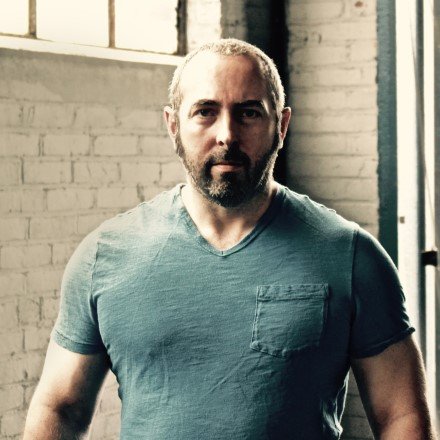 Gershon Ben Keren is a Boston criminologist and security professional who has been working in the security industry since 1990. He also teaches personal safety and self-defense at his school in
Woburn, MA, Krav Maga Yashir Boston (click here for details). He has a 5th Degree Balck Belt in
Krav Maga and was a 2010 indcutee into the Museum of Israeli Martial Arts in Herzliya, Israe.
He has written three Amazon best-selling books on Krav Maga and personal safety and also writes a weekly personal-safety and self-defense blog, containing articles about how to predict,
identify and avoid violence, which can be accessed by clicking here.
Gershon Ben Keren is a Boston criminologist and security professional who has been working in the security industry since 1990. He also teaches personal safety and self-defense at his school in
Woburn, MA, Krav Maga Yashir Boston (click here for details). He has a 5th Degree Balck Belt in
Krav Maga and was a 2010 indcutee into the Museum of Israeli Martial Arts in Herzliya, Israe.
He has written three Amazon best-selling books on Krav Maga and personal safety and also writes a weekly personal-safety and self-defense blog, containing articles about how to predict,
identify and avoid violence, which can be accessed by clicking here.