Halloween Costumes Boston
Halloween costumes are one of the most recognizable and enduring traditions associated with Halloween, but their origins are far older and more complex than the modern practice of dressing as superheroes, celebrities, or fictional characters. The tradition can be traced back to the ancient Celtic festival of Samhain, a seasonal event marking the end of the harvest and the beginning of winter. During Samhain, it was believed that the boundary between the living and the dead became blurred, allowing spirits to move freely among the living. To protect themselves, people would wear disguises, often animal skins or masks, to confuse or ward off wandering spirits.
As Halloween evolved through the influence of Christian traditions such as All Hallows’ Eve, the practice of disguising oneself continued, particularly in parts of Ireland and Scotland. By the Middle Ages, this evolved into “mumming” and “guising,” where individuals, often children or the poor, would dress in costumes and go door-to-door reciting prayers or performing small acts in exchange for food. These early practices laid the foundation for modern trick-or-treating and the idea of dressing up as part of the celebration.
When Halloween traditions were brought to the United States by Irish and Scottish immigrants in the 19th century, the costume element began to change. Early American costumes were often homemade and tended to be simple, with children dressing as ghosts, witches, or other supernatural figures. These costumes reflected the original themes of death, the spirit world, and the unknown, maintaining a connection to the holiday’s origins.
By the early 20th century, Halloween had become more community-focused, and costumes became more widespread, particularly among children. The commercialization of Halloween in the 1920s and 1930s led to the mass production of costumes, making them more accessible and varied. Characters from popular culture began to appear, expanding beyond traditional horror themes. This shift marked a turning point, transforming Halloween costumes from protective disguises into expressions of identity, creativity, and entertainment.
In the modern era, Halloween costumes serve multiple purposes depending on context. For children, they are often playful and imaginative, allowing them to embody heroes, animals, or fantasy characters. For adults, costumes can be humorous, nostalgic, or even provocative, particularly in social settings such as parties or themed events. The rise of pop culture has further influenced costume choices, with trends often reflecting current films, television shows, and social media phenomena.
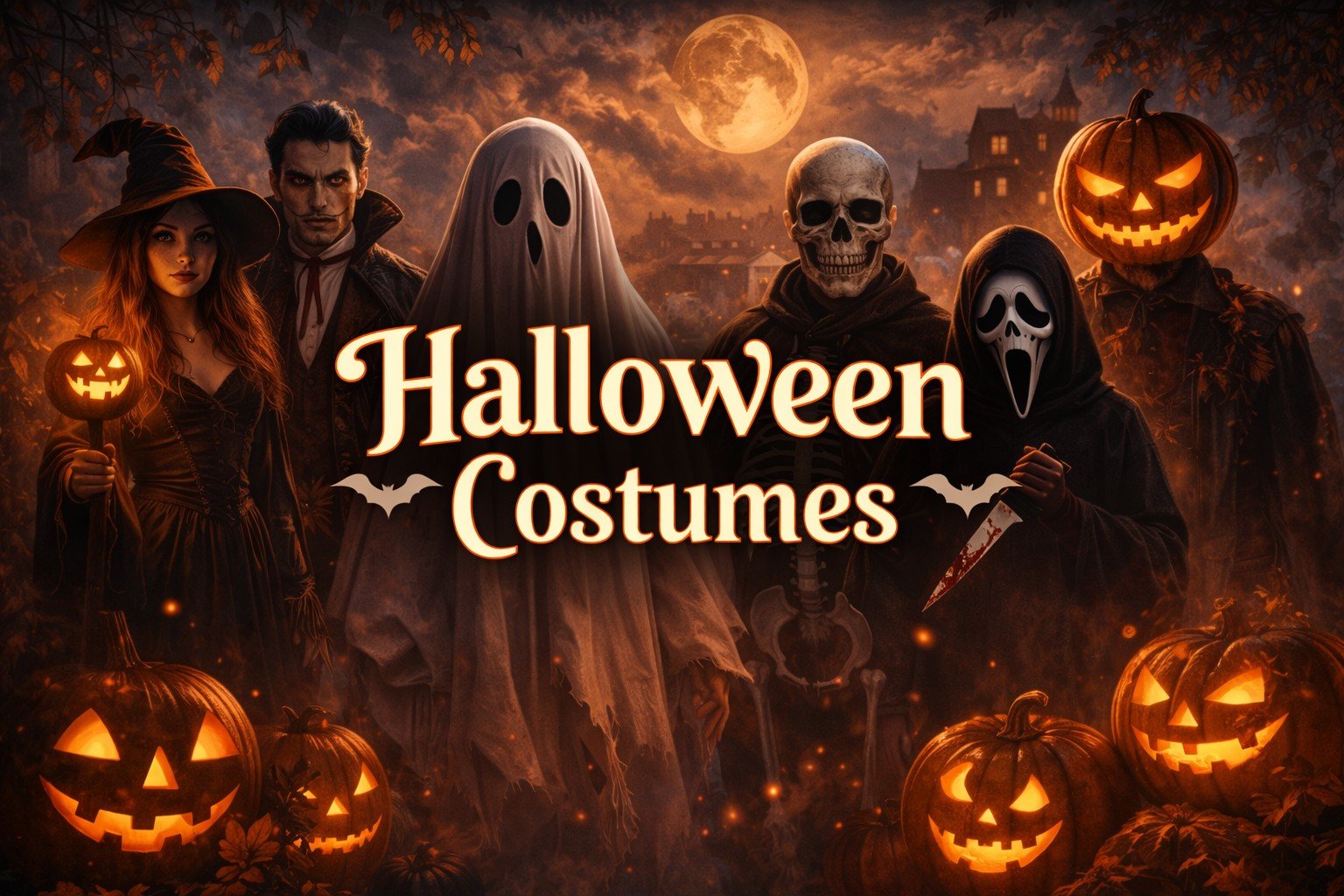
At the same time, traditional costume themes, ghosts, vampires, witches, and skeletons, remain popular, preserving a connection to Halloween’s darker roots. These enduring archetypes reflect the original purpose of costumes as a way of engaging with fear, the unknown, and the supernatural, albeit now in a more symbolic and recreational way.
Ultimately, Halloween costumes represent a blend of history and modern culture. What began as a practical and protective response to ancient beliefs has evolved into a form of creative expression and social participation. Whether handmade or store-bought, simple or elaborate, costumes continue to play a central role in how people experience Halloween, connecting the past with the present in a uniquely visible and imaginative tradition.