Halloween Food
Traditional Halloween foods have origins that stretch back to ancient seasonal rituals, particularly those associated with Samhain. This festival marked the end of the harvest and the beginning of winter, a time when food played both a practical and symbolic role. Communities would gather and share what remained of their crops, often preparing dishes that were simple, filling, and tied to agricultural cycles. These early food traditions were not only about sustenance but also about ritual, with certain ingredients believed to carry meaning related to protection, luck, and the spirit world.
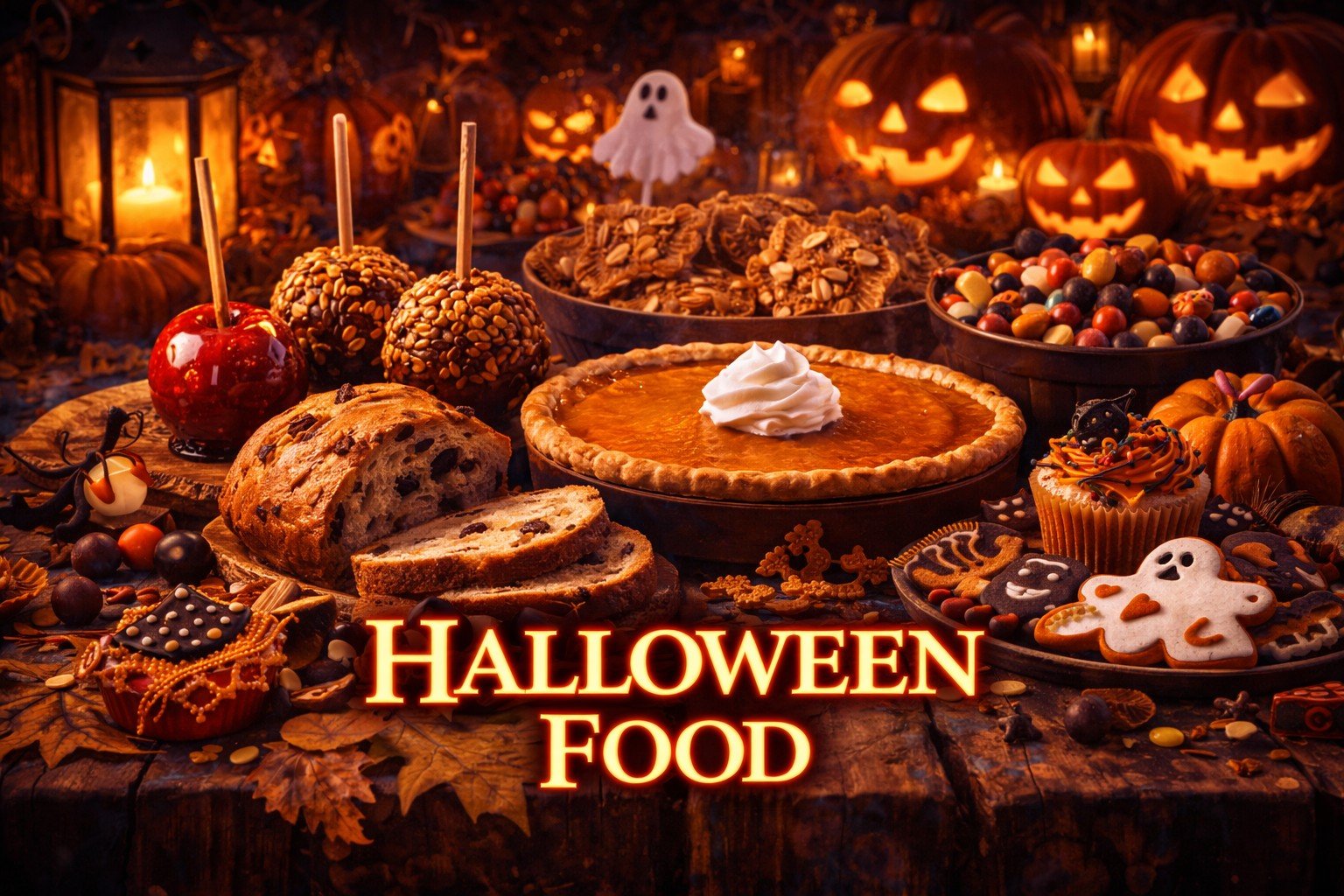
One of the most iconic Halloween foods is the apple, which has deep symbolic roots in both Celtic and Roman traditions. Apples were associated with fertility, the harvest, and the afterlife, making them central to many seasonal rituals. This symbolism carried over into foods such as toffee apples and caramel apples, which are now staples of Halloween celebrations in places like Boston; these treats are often found at fairs, markets, and seasonal events, connecting modern celebrations to much older traditions. Apples also featured in games like bobbing for apples, further reinforcing their cultural significance.
Another traditional Halloween food is barmbrack, an Irish fruit bread that was closely tied to fortune-telling practices. Small objects such as rings, coins, or beans were baked into the loaf, and each item carried a specific meaning for the person who found it. This practice reflects the broader role of Halloween as a time for divination and prediction, particularly concerning the future. As Irish immigrants brought their customs to the United States, elements of these traditions influenced how Halloween was celebrated, even if the original meanings became less widely understood.
Nuts, particularly hazelnuts and chestnuts, were also important in traditional Halloween foods. They were often roasted and used in games or rituals to predict romantic outcomes. For example, two nuts placed side by side in a fire could symbolize a couple; if they burned steadily together, it was seen as a sign of harmony, while popping apart suggested conflict. These foods highlight how Halloween once blended nourishment with symbolic interpretation, turning everyday ingredients into tools for understanding the future.
Pumpkins, now synonymous with Halloween, were not originally part of European traditions but became central after the holiday moved to North America. Early settlers adapted the practice of carving turnips and other root vegetables into lanterns, using pumpkins as a more practical alternative. This led to the widespread use of pumpkins in both decoration and food, including pumpkin pies, soups, and roasted seeds. In Boston, pumpkins are a defining feature of the season, appearing in everything from house decorations, street displays to restaurant menus, reinforcing their role as both a visual and culinary symbol of the holiday.
Sweet treats also became more prominent as Halloween evolved into a community-focused celebration. The tradition of giving food to visitors, originally tied to practices such as “souling,” where people offered prayers in exchange for food, eventually transformed into modern trick-or-treating. Today, candy dominates this aspect of Halloween, but it still reflects the older idea of exchanging food as part of a seasonal ritual.
In modern Boston, Halloween foods represent a blend of these historical influences and contemporary tastes. Seasonal menus often feature traditional ingredients like apples and pumpkins, while also incorporating new variations and presentations. Whether enjoyed at home, at events, or during neighborhood celebrations, these foods connect present-day experiences to a long history of harvest, ritual, and community.
Ultimately, traditional Halloween foods are more than just seasonal treats. They are part of a cultural continuity that links ancient festivals to modern celebrations. In a city like Boston, where history is deeply embedded in the environment, these foods take on an added significance, helping to create a sense of connection between the past and the present during the Halloween season.